What are light cigarettes?
📅 2026 Update: Changes in Product Liability Law
Since the original article was written, significant updates have occurred in product liability law. The introduction of the Restatement (Third) of Torts: Products Liability in 2024 has refined how product defects are evaluated. This is crucial for understanding how claims are processed today.
The original article will continue further down the page, offering foundational knowledge on light cigarettes and related topics.
🛠️ Restatement of Torts
The Restatement (Third) of Torts: Products Liability published in 2024 changes how courts evaluate product defects. It emphasizes a risk-utility analysis for design defects. This means the court will weigh the risks against the benefits of a product's design more carefully.
⏳ Current Case Duration
Product liability cases can take a long time to resolve. They may last from several months to years, depending on complexity and jurisdiction. Understanding this timeline can help plaintiffs manage their expectations.
💸 Legal Fees and Costs
Contingency fees for product liability cases now typically range from 33% to 40% of the recovery amount. Additionally, the cost of expert witness testimony can exceed $25,000. These costs can add up quickly, making it essential to understand potential expenses.
📜 Filing a Claim
To file a product liability lawsuit, a plaintiff must submit a complaint in the appropriate court. This complaint should detail the product defect, injuries sustained, and the damages sought. Proper documentation is key to a successful case.
🗓️ Statute of Limitations
The statute of limitations for filing a product liability claim varies by state. For instance, in California, plaintiffs have two years from the date of injury to file. Knowing these deadlines is crucial for potential plaintiffs.
📌 Key Points to Remember
- 🛠️ The Restatement (Third) of Torts emphasizes risk-utility analysis.
- ⏳ Product liability cases can take months to years to resolve.
- 💸 Legal fees typically range from 33% to 40% of recovery.
- 📜 Filing a claim requires detailed documentation of defects and damages.
- 🗓️ Statute of limitations varies; California allows two years from injury.
💡 Tips for Understanding Product Liability
Review the details of your situation with your attorney to navigate product liability laws effectively.
📝 Understand Defect Categories
Product defects fall into three main categories: design, manufacturing, and marketing defects. Knowing these categories can help in identifying how a product is defective.
📊 Know Your Standing
To bring a claim, you must prove that you were injured by a defective product. This includes showing that the product was defectively designed, manufactured, or marketed.
🔍 Gather Evidence
Collect evidence during the discovery process. This includes depositions, document requests, and interrogatories. Strong evidence can support your claim significantly.
⚖️ Be Aware of Comparative Fault
In some jurisdictions, if you are partially at fault for your injury, your damages may be reduced. Understanding this can influence how you approach your case.
🐢 Plan for Case Duration
Be prepared for a potentially lengthy process. Product liability cases can take time, so managing your expectations is essential for emotional and logistical planning.
💼 Explore Alternative Dispute Resolution
Consider mediation or arbitration as options. These methods can resolve disputes outside of court and may lead to quicker resolutions.
🏆 Free Options Ranked by User Reviews (2026)
No national paid services met the review threshold for this topic. Instead, here are free government and nonprofit resources that can assist with product liability issues.
🥇 1. Legal Services Corporation (LSC)
LSC provides free legal assistance to eligible individuals. This organization focuses on those who cannot afford legal representation. It helps with various legal issues, including product liability claims.
🥈 2. Federal Trade Commission (FTC)
The FTC offers resources and guidance on consumer rights and product safety. They are a valuable source for understanding your rights regarding defective products and how to report them.
🥉 3. State Consumer Protection Offices
These offices provide information on consumer rights and assist with product safety concerns. They can guide you on how to file complaints and what protections are available in your state.
4️⃣ Consumer Advocacy Groups
Organizations like Consumer Reports advocate for consumer rights and product safety. They offer insights into product safety standards and help consumers make informed choices.
5️⃣ Product Liability Databases
Utilize databases that track product recalls and safety information. These resources can help keep you informed about potential dangers associated with products you use.
🔎 Before Paying for Help
- 💰 Check for free legal assistance options first.
- 📜 Understand the fees and services offered.
- 🔍 Review user feedback on any service.
- 📅 Verify the organization's credentials and experience.
❓ Frequently Asked Questions
🔧 What should I do if I suspect a product is defective?
If you suspect a product is defective, report it to the manufacturer and relevant regulatory agencies. Keeping records of your experience can support any potential claims.
⚖️ How does strict liability work in product cases?
Strict liability means manufacturers and sellers are responsible for defective products, regardless of intent or negligence. This can simplify the process for plaintiffs.
🕒 What happens during the discovery phase?
During discovery, both parties gather evidence through depositions, document requests, and interrogatories. This phase is crucial for building a strong case.
⚠️ What are marketing defects?
Marketing defects occur when a product lacks adequate warnings or instructions. If a product is misused due to unclear information, this could lead to liability.
💼 Can I settle a product liability case out of court?
Yes, many product liability cases are settled out of court. Understanding negotiation strategies can be beneficial for reaching a fair settlement.
🏛️ How do state laws impact my product liability claim?
State laws vary significantly in product liability, affecting statutes of limitations, damage caps, and available defenses. Knowing your state's laws is crucial for any claim.
⚖️ Recent Cases Related to Product Liability
Recent court rulings have clarified various aspects of product liability law, impacting how claims are processed and evaluated. These rulings are essential for understanding current legal standards and consumer protections.
- Court rules Hudson Capital not liable in Florida injury caseDistrict Court of Appeal of Florida · July 8, 2022
- Court grants summary judgment in motor vehicle accident caseNew York Supreme Court, Kings County · April 22, 2026
- Court rules on negligence in Conlan v. New York State ElectricNew York Supreme Court, Putnam County · April 15, 2026
- Court rules on liability in J.S.P. v. Congregation Yeshiva caseNew York Supreme Court, Rockland County · April 13, 2026
For more details on recent rulings, check out more rulings on the news page.
End of October 2026 Update
Smoking cigarettes is a highly addictive habit that damages your health in more ways than one. It causes multiple health problems, including respiratory issues, cancer, heart disease, and stroke. As awareness about the dangers of smoking increases, cigarette companies have had to come up with ways to attract smokers who wish to cut back on their cigarette consumption or quit smoking altogether. One such strategy is the production of light cigarettes.
Light cigarettes, also known as “low-tar” or “low-yield” cigarettes, are marketed as a healthier alternative to regular cigarettes. They contain filters or ventilation holes that supposedly reduce the amount of tar and other harmful substances that smokers inhale. In this article, we’ll examine light cigarettes in detail, including their history, dangers, and regulatory status.
History of Light Cigarettes
The concept of light cigarettes dates back to the 1960s. Cigarette companies developed filtered cigarettes that contained less tar and nicotine than regular cigarettes. This innovation was a response to the growing awareness of the dangers of smoking and the consequent decrease in cigarette sales.
The first light cigarettes were marketed as “slim” or “extra-light.” Later, the terms “light” and “ultra-light” became more common. The new cigarettes were marketed as less toxic and less harmful than traditional cigarettes. The marketing worked, and light cigarettes became popular among smokers who believed they were a healthier alternative to traditional cigarettes.
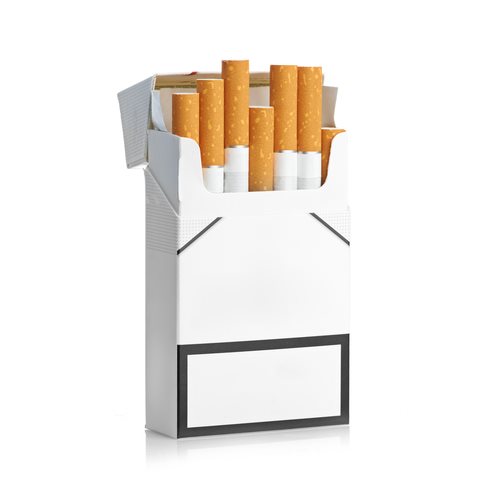
Rationale behind Light Cigarettes
Cigarette manufacturers claim that light cigarettes are less toxic and dangerous than regular cigarettes. They base this claim on the fact that light cigarettes contain less tar and nicotine than traditional cigarettes.
According to cigarette manufacturers, light cigarettes reduce the risk of several health problems, including lung cancer, heart disease, and chronic obstructive pulmonary disease (COPD). Manufacturers have also claimed that light cigarettes help to reduce smoking-related health problems by cutting down the amount of tar and carbon monoxide that smokers inhale.
However, these claims are disputed by independent studies and government organizations. Several studies have demonstrated that light cigarettes are no less dangerous than traditional cigarettes. Despite the claims by cigarette manufacturers, research suggests that the reduction in tar and nicotine levels in light cigarettes doesn't actually translate into a lower risk of smoking-related diseases.
📝 See Also
The Risks of Smoking Light Cigarettes
Light cigarettes are not as “light” as they are marketed to be. In fact, they are just as harmful as traditional cigarettes. The reduction in tar and nicotine levels in light cigarettes doesn't necessarily equate to a decrease in risk. Because of their lower nicotine content, light cigarettes can be more addictive than traditional cigarettes, causing smokers to inhale more smoke to get the same amount of nicotine.
Additionally, smokers of light cigarettes are likely to have a false sense of security regarding their smoking habit. They believe that they are smoking a less dangerous product and feel less pressure to quit. This leads to prolonged smoking, putting them at an even higher risk of lung cancer, heart disease, and other smoking-related illnesses.
Regulatory Responses to Light Cigarettes
Government organizations have been responsive to the dangers of light cigarettes. In the United States, the Federal Trade Commission (FTC) has taken legal action against cigarette manufacturers for false and misleading health claims. The FTC now requires that all light cigarette packs carry a disclaimer stating that “light” and “low tar” do not necessarily mean reduced health risks.
Several countries, including the United Kingdom and Australia, have gone even further by banning the use of terms like “light” and “low tar” on cigarette packaging and advertising. The European Union has issued regulations to cease the production of light and ultralight cigarettes.
Conclusion
Despite being marketed as a “healthier” option for smokers, light cigarettes are just as harmful as traditional cigarettes. Cigarette manufacturers have misled consumers into believing that light cigarettes are less toxic, but this is not the case. Research has shown that light cigarettes pose the same health risks as traditional cigarettes.
It is essential to be informed about these issues, so you can make the best decisions for your health. If you are a smoker, quitting smoking should always be your priority. If you are struggling to quit, consider seeking support from a healthcare professional or a cessation program provided by your local government.
What are Light Cigarettes?
Light cigarettes were developed in the 1970's by the tobacco industry. The tobacco industry claimed that light cigarettes have reduced levels of tar, nicotine and other chemicals inhaled during smoking. The cigarettes, known by the names "light", "mild", and "ultra light" are distinguished by the filter that is used in making the cigarette. The filters have holes in them that are intended to add more air into the lungs and decrease the percentage of chemicals taken into the lungs when breathing in the cigarette smoke.
Light cigarettes, in actuality, are no different than regular strength cigarettes in the amount of chemicals taken into the lungs. The idea of light cigarettes was developed by tobacco companies in order to "trick" new government regulations on tar and nicotine consumption. Where the FTC, in 1967, developed a machine to gauge the amount of chemicals taken in through cigarette smoke the machine was flawed. This is because of many factors that show the difference between human consumption of cigarettes and machine consumption of cigarettes.
What are the Side Effects of Smoking Light Cigarettes?
The smoking of light cigarettes carries with it the same health effects of normal cigarette consumption. As with normal cigarettes, smoking is a major risk factor in strokes, heart attack, emphysema, pulmonary disease, and cancer. It is also a factor in Crohn's disease and is the number one cause of bladder cancer.
Government Regulation
In 2009 the Senate passed legislation that effectively limited the marketing of "light" cigarettes. This legislation required tobacco companies to cease using terms such as "light", "mild" and "ultra light." In addition the legislation passed forbids tobacco companies from marketing these types of cigarettes as being lower in chemicals such as tar, nicotine, etc. However, the tobacco companies have been proactive in countering this legislation be re-designating these types of products by color codes. What were once Camel Lights are now Camel Blues. The reclassification of the product has been shown to have little effect on smoking habits and does little as a deterrent.
Lawsuits
The current trend in tobacco litigation is to sue tobacco companies for unfair business practice. Many of these class action lawsuits claim that the tobacco industry not only misled the government, but consumers when they gave the impression that cigarettes with designations such as "light" had less chemicals and were thus healthier. Plaintiffs in these suits allege that the tobacco industry was aware of the flaws in the FTC machines used by the government to test for chemicals and purposefully developed the cigarette filters and paper in order to defeat detection of increased amounts of chemicals. They site data from the National Cancer Institute and the Center for Disease Control that indicates that smoking machines numbers are artificially low.
In 2003 Phillip Morris, the producer of Marlboro lights, lost a case based on the "deceptive practices" theory and were ordered to pay $10 billion in both compensatory and punitive damages.
The main defense by the tobacco industry is that they are within federal regulations and state laws are preempted. However, in a 2008 Supreme Court case the Justices found that common law legal duties, such as manufacturer's duties, were not preempted by federal law. This has opened the door to tobacco misrepresentation suits in the states.